Bullion Reserve · From the counter

Counter Notes

What we explain across the glass, written down — what your scrap gold is actually worth, why the assay card matters more than the bar, and how licensed collectible silver gets priced.

Across the glass

Every note

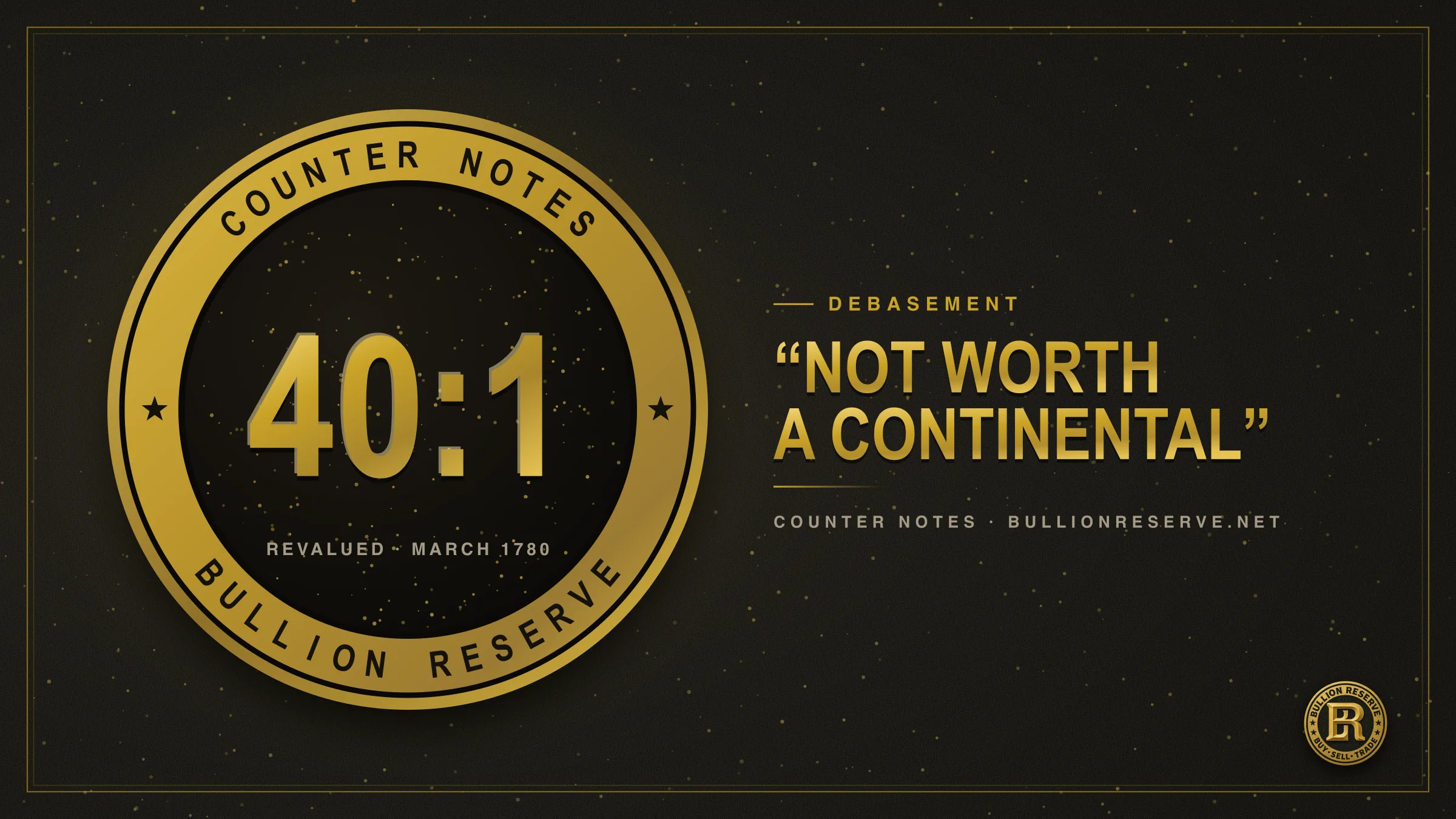
Cover art for “"Not worth a Continental": America's first paper money and how it died”debasement
October 1, 2026

"Not worth a Continental": America's first paper money and how it died

Before there was a dollar defined in silver, there was a dollar defined in nothing. The Continental currency financed a war and then evaporated, and the men who wrote "gold and silver coin" into the Constitution had watched it happen.

Read more
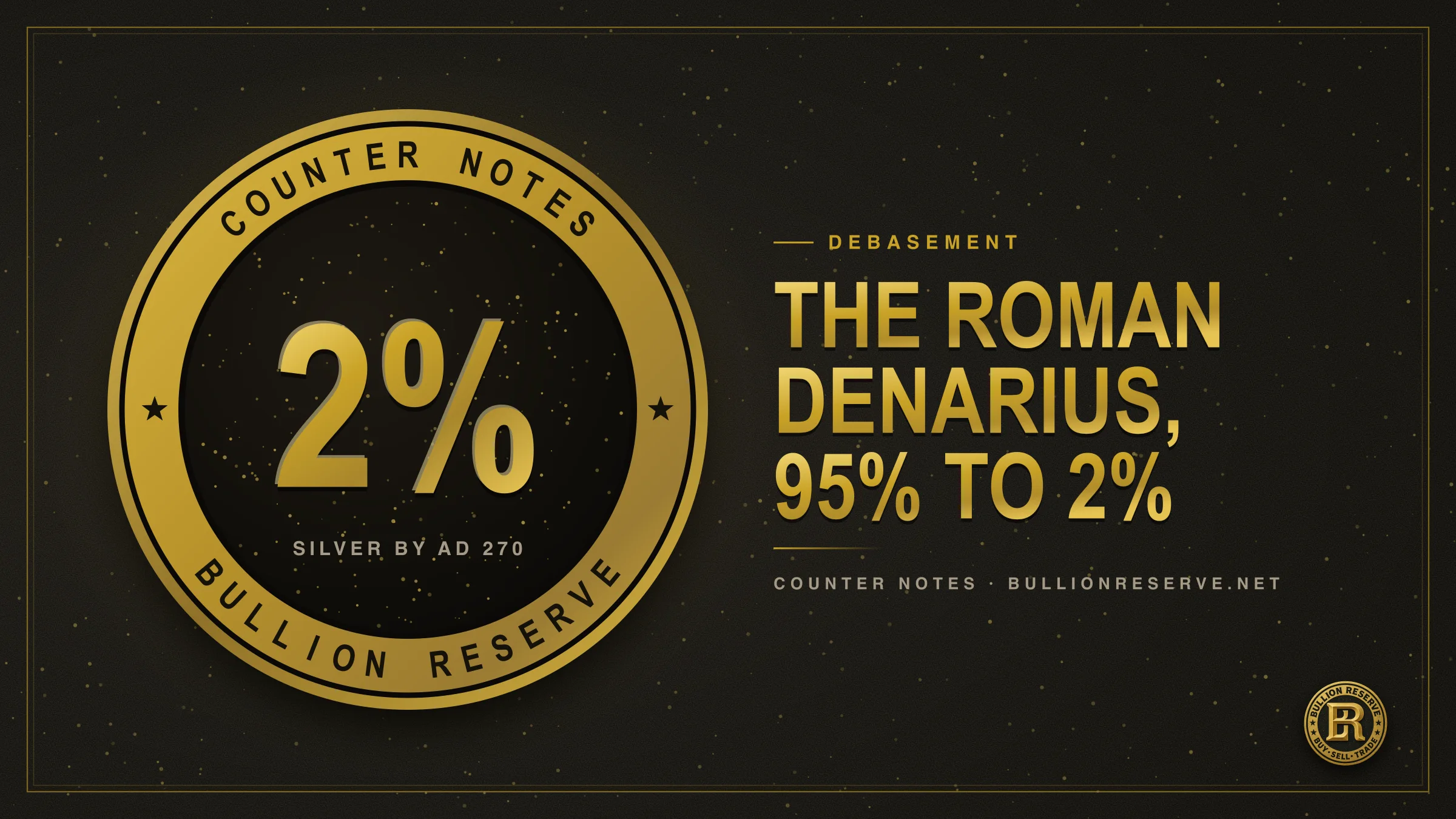
Cover art for “The Roman denarius: from 95% silver to 2% in 250 years”debasement
September 28, 2026

The Roman denarius: from 95% silver to 2% in 250 years

Hold a denarius of Augustus and one of Gallienus and you are holding the same name on two different things: one is silver, the other is a copper disc dipped in it. The road between them took 250 years, and every step was a budget decision.

Read more
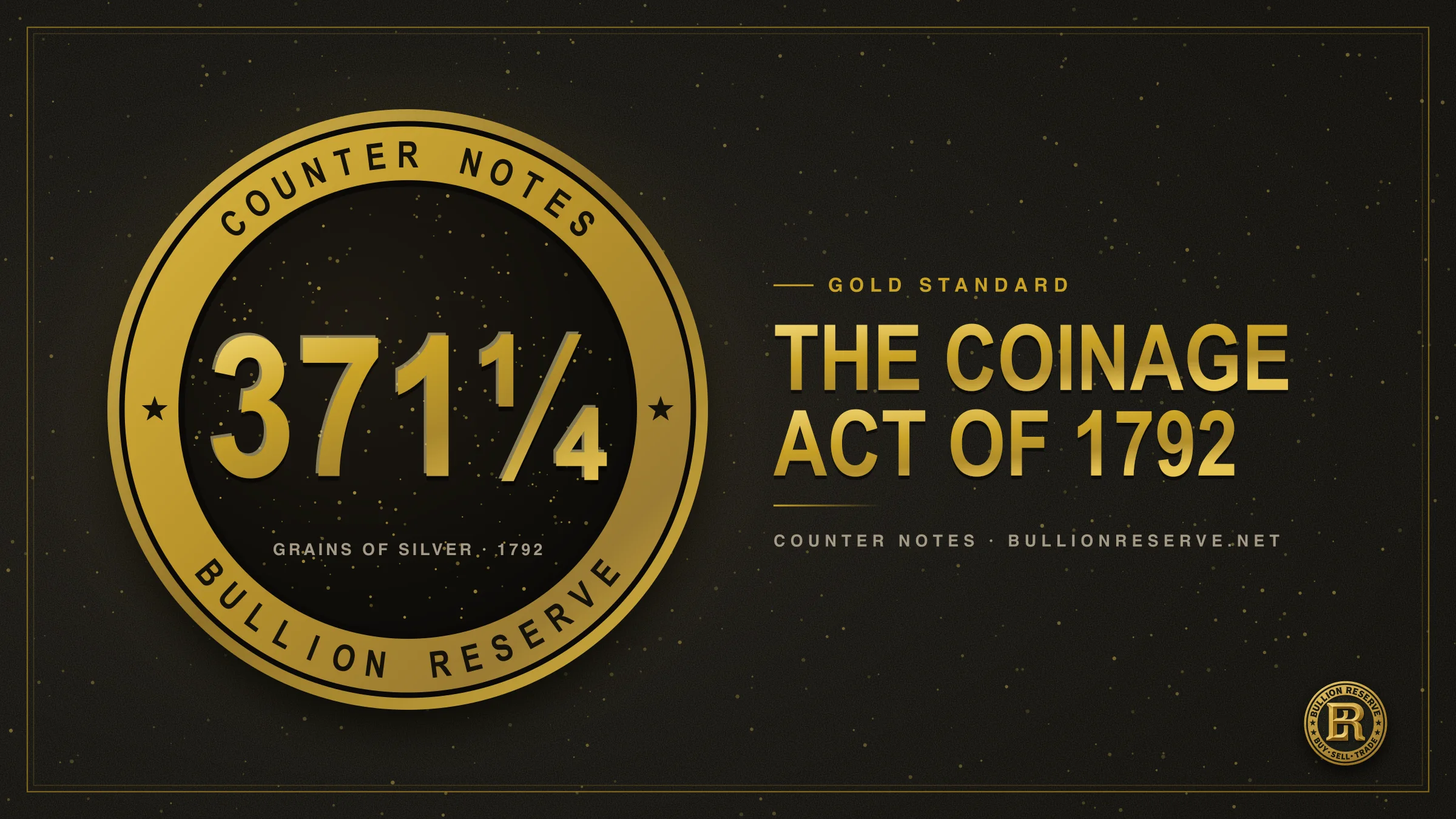
Cover art for “The Coinage Act of 1792: the day a dollar was 371¼ grains of silver”gold standard
September 23, 2026

The Coinage Act of 1792: the day a dollar was 371¼ grains of silver

The first thing Congress did with the word "dollar" was give it a weight: 371.25 grains of pure silver, or 24.75 grains of pure gold. Hamilton's design was elegant and had one flaw, and the flaw is the story of the next 80 years of American money.

Read more
Cover art for “Why gold is money: the chemistry, the scarcity and the 5,000-year habit”gold
September 3, 2026

Why gold is money: the chemistry, the scarcity and the 5,000-year habit

Run the periodic table through five tests (scarce, doesn't corrode, safe to hold, easy to divide, rare enough to matter but not so rare you can't find any) and one element is left standing. The habit is 5,000 years old, and it started with the chemistry.

Read more
Cover art for “What currency debasement is, and why it never looks like theft at the time”debasement
August 27, 2026

What currency debasement is, and why it never looks like theft at the time

Debasement is when the thing called a dollar, or a denarius, or a shilling, comes to contain less than it did, while the name stays the same. It has been done with a shears, a furnace and, now, a keyboard.

Read more

The series

What these notes cover

Counter Notes is the history behind the questions people ask across the glass: what currency debasement is and how it has worked from clipped coins to printed money, what the gold standard actually was and why it ended, how the dollar's buying power has moved since 1913, and the stories that follow gold and silver around — 1933, 1971, the Hunt brothers, the coins that left circulation.

Nothing here is a forecast and nothing quotes today's price; the live spot board at the top of every page does that. The notes are the long record, written the way the counter explains it: dates, figures and sources, both sides where the history has two camps.

When a note turns into a question about your own metal, the practical pages pick it up: how bullion is priced to buy, what the counter pays when you sell and how every piece is tested.

Before you read

Questions the notes keep answering

Is any of this investment advice?
No. The notes are history and mechanics — how debasement, inflation and the gold standard actually worked — with sources listed. What to do with your own money is your call, and nothing here forecasts a price.
Where do the figures come from?
Every date and number traces to a listed source — statutes, Federal Reserve and Treasury records, and the standard histories. When a figure is disputed, the note gives the range and says who disagrees.
Why does a gold counter write history?
Because the same questions come across the glass every week: why the dollar buys less, what happened in 1933 and 1971, whether gold protects against inflation. Writing the long answers down beats rushing them at the counter.
Rather just find out what it's worth?
Free evaluation at the counter — 337 E 11 Mile Rd, Madison Heights. Watch the test, hear the number, no obligation.
Call (248) 247-9240